
Every morning, millions of people walk into their offices, coffee in hand, and sit down at their desks without a second thought. The office desk is a place for work, meetings, and sometimes even meals. But have you ever wondered what else might be living on your desk? Research shows that an average office desk can harbor hundreds of times more bacteria than a toilet seat. This invisible world is rarely discussed, yet it plays a crucial role in our daily health and productivity. Understanding office desk bacteria is not just about hygiene; it’s about protecting yourself and your colleagues from unwanted illness and distractions.
The Hidden World Of Office Desk Bacteria
You may not see them, but bacteria are everywhere. Your desk, keyboard, mouse, and phone are like small cities for these tiny organisms. Every time you touch your face, eat a snack, or sneeze at your desk, you add to this microscopic population. According to a study by the University of Arizona, the typical office desk contains about 10 million bacteria—that’s 400 times more than the average toilet seat. The reason is simple: desks are rarely cleaned but touched constantly.
Why Are Office Desks So Dirty?
Most offices have regular cleaning for floors and bathrooms, but desks are often left to employees. People eat at their desks, spill drinks, and even leave behind tissues or crumbs. Keyboards and phones get touched after eating, coughing, or visiting the restroom, but they seldom get disinfected. These habits create the perfect conditions for bacterial colonies to grow.
The Most Contaminated Items On Your Desk
Not all surfaces are equal. Some items on your desk are more likely to be covered in bacteria. Here’s a quick look at where germs love to hide:
- Keyboard – Crumbs and skin cells fall between the keys, creating a perfect home for bacteria.
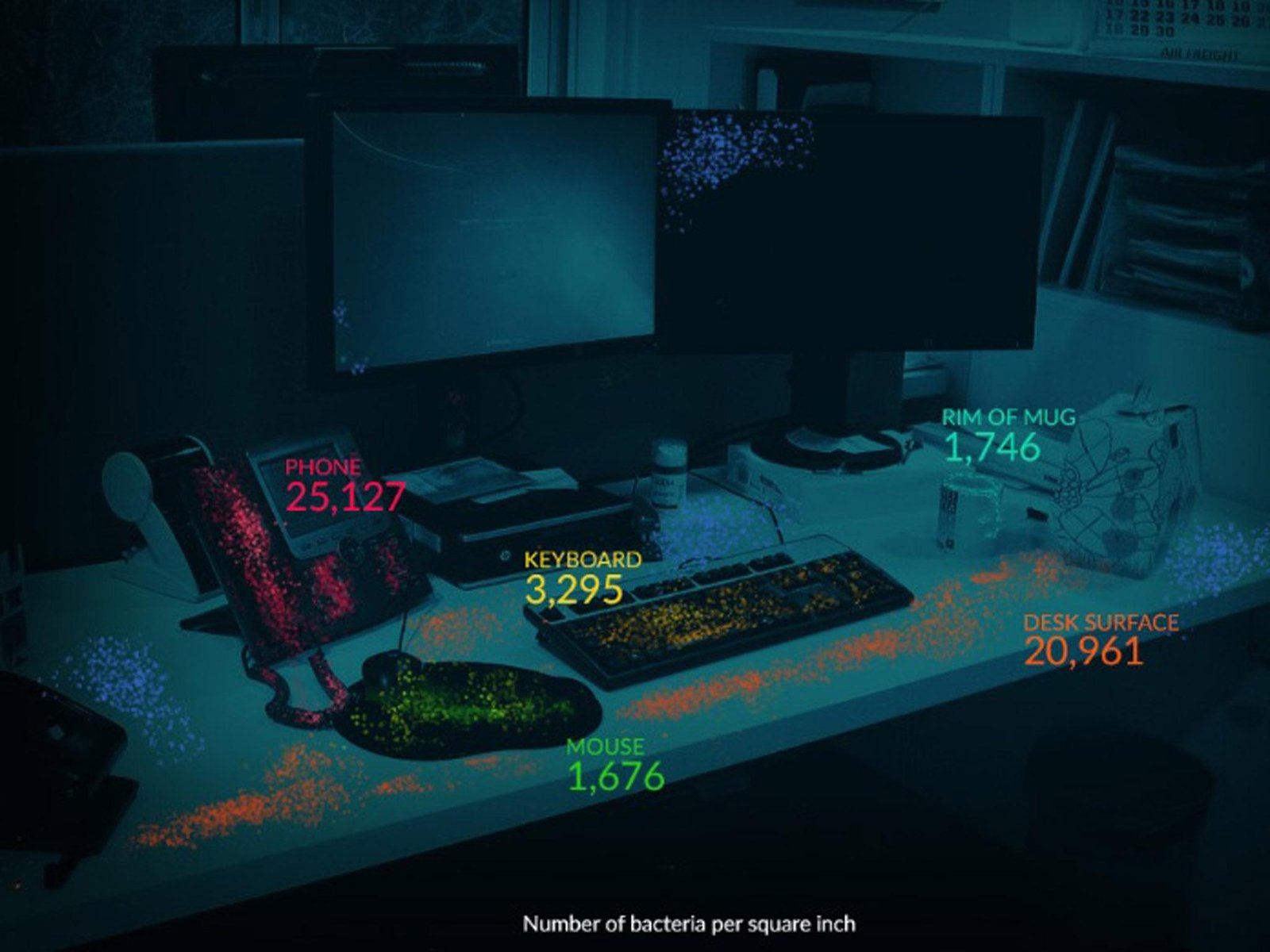
- Phone – Your office phone can have over 25,000 germs per square inch, especially since it touches your face and hands.
- Mouse – Often used with one hand while eating, the mouse is rarely cleaned.
- Desk Surface – Papers, hands, and food all contribute to a growing population of bacteria.
- Pens and Stationery – Shared pens and other tools often carry bacteria from person to person.
- Drawer Handles – Touched with dirty hands, but rarely cleaned.
These are just a few examples, but nearly everything on your desk can become a germ hotspot if not regularly cleaned.
Types Of Bacteria Commonly Found On Office Desks
It’s easy to think of bacteria as bad, but not all are harmful. However, some types commonly found on office desks can cause illness or discomfort. Here are a few you might encounter:
- Staphylococcus aureus: Often found on skin, this bacterium can cause infections if it enters a cut.
- Escherichia coli (E. coli): Common in human intestines, but can cause stomach issues if ingested.
- Pseudomonas: Known for surviving on surfaces for long periods and can be harmful, especially for people with weak immune systems.
- Bacillus: Spore-forming bacteria that can survive harsh conditions.
- Micrococcus: Usually harmless, but can cause problems for people with immune system issues.
Most of these bacteria get onto your desk through hand contact, sneezing, eating, or sharing office equipment.
Credit: www.independent.co.uk
How Bacteria Spread In The Office
Bacteria can spread in many ways in a typical office. Let’s look at some common routes:
- Touch: The most common way bacteria move from surface to surface. Shaking hands, sharing pens, or touching a shared printer all transfer bacteria.
- Air: Sneezing or coughing releases droplets that land on desks, keyboards, and other items.
- Food: Eating at your desk transfers bacteria from your hands and mouth to your work area.
- Shared Equipment: Items like staplers, phones, and even the coffee machine can become germ transfer points.
One study found that a single contaminated doorknob can spread bacteria to 60% of office surfaces within just a few hours. This shows how quickly germs can move in a shared environment.
Surprising Data: How Dirty Are Office Desks?
Let’s compare some common office items by their average bacteria count per square inch:
| Office Item | Bacteria Count (per sq. inch) |
|---|---|
| Desk Surface | 20,961 |
| Phone | 25,127 |
| Keyboard | 3,295 |
| Mouse | 1,676 |
| Toilet Seat | 49 |
As you can see, the toilet seat is much cleaner than most things on your desk! This data highlights why regular cleaning and good habits are so important in the office.
Health Risks Linked To Office Desk Bacteria
You might wonder: if we’re surrounded by bacteria, why aren’t we always sick? The human body can handle many germs, but some bacteria can cause problems—especially in a workplace where people are close together.
Common Health Issues
- Colds and flu: Viruses and bacteria can survive on surfaces for hours or even days, making it easy to catch a cold from a shared desk or keyboard.
- Stomach bugs: Touching your mouth after handling contaminated items can lead to stomach pain, vomiting, or diarrhea.
- Skin infections: If you have a cut or scratch, bacteria like Staphylococcus can enter and cause infection.
- Allergies: Bacteria, mold, and dust can trigger allergies or asthma, especially in people who are sensitive.
At-risk Groups
Not everyone is affected the same way. People with weaker immune systems, such as the elderly, pregnant women, or those with chronic illnesses, are more likely to get sick from office germs. Even healthy adults can lose workdays due to illnesses that spread easily in the office.
Uncommon Insights: What Most People Miss
Many articles talk about washing hands and wiping desks, but there are a few less obvious tips that can make a big difference:
1. The Role Of Desk Plants
Some office workers keep plants on their desks for decoration. What they don’t realize is that soil and water trays can be a breeding ground for bacteria and mold. Overwatering or letting water sit in trays encourages growth of harmful microbes. If you keep plants, change the water regularly and avoid letting soil spill onto your desk.
2. Food Wrappers And Drink Cups
Leaving food wrappers or cups on your desk, even for a few hours, can attract bacteria and pests. Sticky residue and crumbs are perfect for bacteria to multiply. Always throw away wrappers and wash cups or bottles daily.
3. Headphones And Earbuds
If you use headphones at your desk, bacteria from your skin and ears can build up quickly—especially on soft ear pads. Wipe them down once a week with a gentle disinfectant.
How To Keep Your Desk Clean: Practical Steps
Regular cleaning and a few simple habits can drastically reduce the amount of bacteria on your desk. Here’s how:
Step 1: Clean Your Desk Surface
- Use disinfectant wipes or a spray with a clean cloth.
- Focus on areas where your hands rest the most.
- Clean at least once a week; daily is better if you eat at your desk.
Step 2: Disinfect Keyboards And Mice
- Turn off your computer and gently shake out crumbs.
- Use a soft brush to remove dirt between the keys.
- Wipe with a disinfectant wipe or cloth, being careful not to get liquid inside.
Step 3: Sanitize Phones And Headsets
- Wipe down your phone and headset with an alcohol-based cleaner.
- Don’t forget the buttons and mouthpiece.
Step 4: Keep Food Away
- Eat in the kitchen or break room whenever possible.
- If you must eat at your desk, clean up crumbs and spills immediately.
Step 5: Wash Your Hands Often
- Use soap and water or an alcohol-based hand gel.
- Wash before and after eating, after using the restroom, and after touching shared equipment.
Step 6: Reduce Clutter
- The more items on your desk, the more places for bacteria to hide.
- Keep only necessary items on your desk and store others away.
Step 7: Clean Personal Items
- Wipe down pens, coffee mugs, and other personal items weekly.
- Don’t share these items with others if possible.
Comparing Cleaning Methods For Office Desks
With so many cleaning products available, it’s important to choose the right one for your office desk. Here’s how some common cleaners stack up:
| Cleaning Method | Effectiveness Against Bacteria | How Often to Use | Notes |
|---|---|---|---|
| Disinfectant Wipes | High | Daily/Weekly | Convenient, quick drying |
| Soap & Water | Moderate | Weekly | Safe for most surfaces |
| Alcohol-based Sprays | High | Weekly | Dries fast, good for electronics |
| UV Light Sanitizers | Very High | Monthly | Best for phones, keyboards |
| Paper Towels Only | Low | As needed | Good for crumbs, not bacteria |
Disinfectant wipes and alcohol-based sprays offer the best mix of convenience and effectiveness. UV light sanitizers are excellent for deep cleaning, especially in shared spaces.
Workplace Habits That Reduce Bacteria
Changing a few daily habits can make a big difference for your health and the cleanliness of your workspace:
- Don’t touch your face while at your desk.
- Avoid sharing personal items like pens, phones, and headphones.
- Clean up spills and crumbs right away.
- Store food in sealed containers and keep it out of your desk drawers.
- Encourage regular cleaning of shared equipment in your office.
If your office has a cleaning service, ask how often desks are cleaned. If cleaning is up to you, set a reminder to wipe down your desk each Friday before you leave.
Office Desk Bacteria And Remote Work
With more people working from home, you might think your desk is cleaner. But home desks can be just as dirty as office desks, especially if you eat there, work long hours, or share your space with family. The same cleaning rules apply at home: wipe down surfaces, keep food away, and wash your hands often.
Credit: www.istockphoto.com
The Science Behind Bacteria Growth
Bacteria multiply quickly under the right conditions: warmth, moisture, and food. Offices often have all three. When you leave a coffee cup or spill water, bacteria use the moisture to grow. Crumbs provide food, and the warmth from your hands or computer helps bacteria reproduce even faster. Some types, like Bacillus, can survive for weeks on dry surfaces. This is why regular cleaning is so important.
The Psychology Of A Clean Desk
A clean desk isn’t just good for your health. Studies show that people who work at tidy desks are more productive, focused, and less stressed. Clutter and visible dirt can distract you and even lower your motivation. Making cleaning a part of your weekly routine can improve both your health and your work performance.
How Companies Can Encourage Clean Desks
Employers can help reduce office desk bacteria by:
- Providing cleaning supplies like wipes and sprays at every workstation.
- Setting up regular reminders for employees to clean their desks.
- Offering training on the importance of desk hygiene.
- Making sure shared equipment is cleaned daily.
- Encouraging breaks in the kitchen or break room instead of at desks.
Small changes can help prevent illness outbreaks and keep everyone more comfortable and productive.
Real-life Examples: Office Outbreaks
There have been cases where dirty desks contributed to illness outbreaks in offices. For example, one company in the UK saw a spike in stomach bugs during winter. Investigation found that shared phones and break room tables were rarely cleaned.
After introducing regular cleaning and hand sanitizer stations, sick days dropped by 30%. This shows that simple changes can have a big impact on health.
Myths And Misconceptions About Office Desk Bacteria
Let’s clear up some common myths:
- Myth 1: “You can’t get sick from your desk.” In reality, desks often harbor bacteria and viruses that can cause illness.
- Myth 2: “Hand sanitizer is enough.” While helpful, sanitizer doesn’t remove crumbs, dust, or sticky residue where bacteria can hide.
- Myth 3: “Only shared desks need cleaning.” Even personal desks can become dirty, especially if you eat or work long hours.
- Myth 4: “Paper and files don’t carry germs.” Bacteria can survive on paper for several hours, especially in humid conditions.
Understanding the facts helps you make better choices for your health.
The Future: Smart Desks And Clean Tech
Technology is changing how we work and how we keep our desks clean. Some companies are developing smart desks with built-in UV lights that disinfect surfaces at night. Others use sensors to remind users to clean their desk or wash their hands. This new tech can help reduce bacteria, but good habits and regular cleaning are still the most important factors.
For more information on workplace hygiene and bacteria, see this resource from the Centers for Disease Control and Prevention.
Credit: workplaceinsight.net
Frequently Asked Questions
What Are The Most Common Bacteria Found On Office Desks?
The most common types include Staphylococcus aureus, E. coli, Pseudomonas, Bacillus, and Micrococcus. These can come from skin, food, or contaminated surfaces.
How Often Should I Clean My Office Desk?
For best results, wipe down your desk daily if you eat at it, and at least once a week otherwise. Keyboards, phones, and mice should be disinfected weekly.
Can I Get Sick From Touching A Dirty Desk?
Yes, touching a dirty desk and then touching your mouth, nose, or eyes can lead to illness. Bacteria and viruses can survive on surfaces for hours or days.
Are Home Desks Cleaner Than Office Desks?
Not always. Home desks can be just as dirty, especially if you snack, work long hours, or don’t clean regularly. The same cleaning habits should be used at home and in the office.
What Is The Best Way To Disinfect Electronics Like Keyboards And Phones?
Use alcohol-based wipes or sprays designed for electronics. Turn off the device, use a soft cloth, and avoid getting moisture inside the device.
—
A clean desk is more than just a tidy workspace—it’s a key part of protecting your health and well-being. By understanding the risks, following good habits, and using the right cleaning methods, you can create a safer and more productive environment.
Remember, the fight against office desk bacteria starts with you.