
A clean office is not just about appearances. It directly affects the health, morale, and productivity of everyone who works there. A well-organized office cleaning checklist can make the difference between a space that supports great work and one that causes stress, illness, or even lost business.
Whether you manage a small office or a large corporate space, understanding what should be cleaned, how often, and by whom is essential. Many people overlook crucial tasks or underestimate the time it takes to keep an office in top shape.
This guide will give you a full, detailed office cleaning checklist, along with practical tips, important insights, and common mistakes to avoid.
Why An Office Cleaning Checklist Matters
A clean office is more than just a nice-to-have. Studies show that workplaces with regular, thorough cleaning have fewer sick days, better air quality, and higher employee satisfaction. According to the CDC, effective cleaning can reduce the spread of common germs by up to 80%. Yet, many offices rely on “visual checks,” which often miss hidden dirt and bacteria.
A written cleaning checklist ensures that:
- No important task is forgotten
- Cleaning is consistent, no matter who does it
- Responsibilities are clear
- High-traffic and high-touch areas get special attention
- Health and safety standards are met
It’s common to miss less-visible spots like door handles or the backs of chairs. A checklist keeps everything on track, even as staff members change or the office grows.
Daily Office Cleaning Tasks
Daily cleaning keeps the office presentable and safe. These tasks focus on surfaces and areas that are used the most. Skipping daily cleaning means dirt and germs build up quickly.
- Empty Trash Bins: Remove all garbage and recycling from desks, kitchens, and meeting rooms. Replace liners as needed.
- Wipe Down Desks: Use disinfectant wipes or sprays on desktops, keyboards, and mice. Make sure to clean personal devices and shared equipment.
- Clean Door Handles and Light Switches: These are high-touch spots that often carry germs.
- Vacuum Carpets and Rugs: Focus on main pathways and under desks.
- Sweep and Mop Hard Floors: Especially important in entrances, kitchens, and bathrooms.
- Disinfect Phones and Headsets: Shared devices should be cleaned daily.
- Tidy Common Areas: Organize magazines, arrange chairs, and clear clutter in reception and waiting rooms.
- Clean Kitchen Surfaces: Wipe counters, sinks, and appliance handles.
- Restock Supplies: Make sure tissues, soap, paper towels, and hand sanitizer are available.
Non-obvious tip: Don’t forget to check under desks and behind trash bins—these spots collect dust and crumbs, which can attract pests.

Credit: sweptworks.com
Weekly Office Cleaning Tasks
Weekly tasks go deeper and help keep the office fresh and professional. These jobs often require more time and attention but prevent bigger problems later.
- Dust Furniture and Fixtures: Clean shelves, window sills, baseboards, and picture frames.
- Polish Glass and Mirrors: Meeting room glass, entrance doors, and bathroom mirrors should be streak-free.
- Clean Computer Screens and Monitors: Use special wipes to avoid scratching.
- Sanitize Office Chairs: Focus on armrests and backs where hands touch most.
- Vacuum Upholstery: Remove dust and allergens from fabric chairs and couches.
- Deep Clean Kitchen Appliances: Wipe inside microwaves, refrigerators, and coffee machines.
- Disinfect Bathroom Fixtures: Scrub sinks, faucets, and toilet handles.
- Organize Storage Areas: Tidy supply closets and filing cabinets.
Non-obvious tip: Move small items off surfaces before dusting. This prevents spreading dust around and ensures a more thorough clean.
Monthly Office Cleaning Tasks
Monthly cleaning targets areas that don’t need daily attention but can cause issues if ignored.
- Wash Windows (Inside): Remove smudges and dust for better light and a cleaner look.
- Vacuum Behind and Under Furniture: Go beyond what’s visible—dust and debris build up fast.
- Clean Air Vents and Fans: Dirty vents reduce air quality and spread allergens.
- Sanitize Computer Keyboards Thoroughly: Remove keys if possible for a deeper clean.
- Wipe Down Walls and Doors: Focus on smudges, fingerprints, and marks.
- Deep Clean Trash and Recycling Bins: Wash with soap and water to remove odors and bacteria.
- Descale Kettles and Coffee Makers: Limescale can affect taste and machine life.
- Check for Mold in Damp Areas: Especially in bathrooms and kitchens.
A monthly cleaning walk-through helps spot early signs of maintenance issues or pest problems.
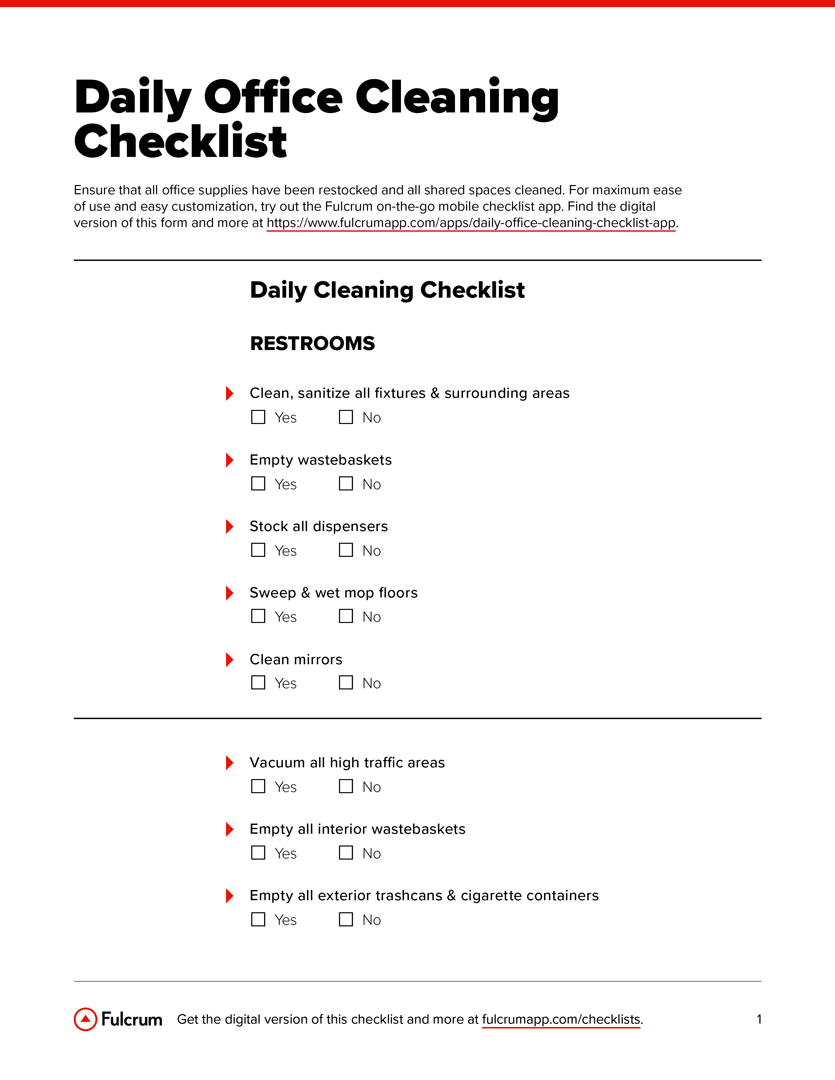
Credit: www.fulcrumapp.com
Seasonal And Annual Office Cleaning Tasks
Some cleaning jobs only need attention every few months or once a year. Neglecting these can shorten the life of office equipment and furniture.
- Professional Carpet Cleaning: Removes deep dirt and stains.
- Clean Window Exteriors: Improves building appearance and lets in more light.
- Wash Blinds and Curtains: Dust and allergens collect here.
- Polish Wood Surfaces: Desks, meeting tables, and cabinets last longer with proper care.
- Service HVAC Filters: Clean or replace for better air and energy efficiency.
- Check and Clean Light Fixtures: Dusty fixtures reduce brightness.
- Inspect for Pests: Look for signs of insects or rodents and treat as needed.
- Declutter Old Files and Supplies: Free up space and reduce fire risk.
Tip: Schedule these tasks during quieter periods or holidays to avoid disrupting work.
Cleaning Checklist By Office Area
Different areas in the office have unique cleaning needs. Here’s a breakdown to make sure nothing is missed.
Reception And Waiting Areas
- Wipe down reception desk, counters, and seating
- Clean glass doors and partitions
- Arrange magazines and brochures neatly
- Dust plants and decorative items
- Vacuum carpets and mop floors
Workstations And Offices
- Disinfect desks, phones, and keyboards
- Dust shelves and organizers
- Empty trash and recycling
- Wipe chairs and armrests
- Clean light switches and handles
Meeting And Conference Rooms
- Clean tables and presentation equipment
- Wipe whiteboards and markers
- Disinfect remote controls
- Arrange chairs and cables neatly
- Vacuum or mop floors
Kitchen And Break Room
- Clean countertops, sinks, and appliances
- Empty and wipe out fridge weekly
- Wash dishes or load dishwasher
- Restock coffee, tea, and supplies
- Sweep and mop floors
Restrooms
- Clean sinks, toilets, and urinals
- Disinfect taps and handles
- Refill soap, toilet paper, and towels
- Empty sanitary bins
- Mop floors with disinfectant
Storage And Utility Areas
- Sweep and organize supplies
- Check for expired items
- Wipe shelves and containers
- Secure cleaning chemicals safely
Office Cleaning Supplies Checklist
Having the right supplies makes cleaning quicker and more effective. Missing items can cause delays or incomplete cleaning.
Basic cleaning supplies include:
- Microfiber cloths
- Disinfectant sprays and wipes
- Glass cleaner
- All-purpose cleaner
- Mop and bucket
- Broom and dustpan
- Vacuum cleaner
- Trash bags and liners
- Rubber gloves
- Duster (extendable for high spots)
- Sponges and scrub brushes
- Air freshener
Pro tip: Choose eco-friendly cleaners where possible. They are better for health and reduce chemical exposure.
Who Should Use The Office Cleaning Checklist?
The checklist is useful for:
- Office managers: To supervise cleaning staff or outside contractors
- Cleaning teams: For consistency and thoroughness
- Employees: To keep personal workspaces tidy
- Business owners: To ensure health and safety compliance
Smaller offices might assign daily cleaning tasks to staff on rotation. Larger spaces usually hire professional cleaning services. Either way, a checklist keeps everyone accountable.
Sample Office Cleaning Checklist
Here’s a sample checklist for reference. It covers daily, weekly, and monthly tasks by area.
| Task | Area | Frequency | Responsible |
|---|---|---|---|
| Empty trash bins | All areas | Daily | Cleaning staff |
| Wipe desks | Workstations | Daily | Employees |
| Sanitize kitchen appliances | Kitchen | Weekly | Cleaning staff |
| Vacuum behind furniture | All areas | Monthly | Cleaning staff |
| Clean window exteriors | Office building | Seasonal | Professional service |
Common Office Cleaning Mistakes To Avoid
Cleaning might sound simple, but many offices repeat the same errors. Some mistakes can lead to health issues, pest problems, or equipment damage.
- Ignoring High-Touch Surfaces: Door handles, elevator buttons, and shared equipment are germ hotspots.
- Using the Wrong Cleaners: Harsh chemicals on screens or wood can cause damage.
- Not Rotating Deep-Clean Tasks: Focus only on what’s visible, ignoring less-accessed areas.
- Neglecting Air Quality: Skipping air vents or filters can lead to allergies and sickness.
- Letting Clutter Build Up: Untidy areas are harder to clean and may hide pests or hazards.
One non-obvious mistake: Many offices forget to clean inside desk drawers, where crumbs and dust can build up over months.

Credit: www.template.net
Assigning Cleaning Responsibilities
Clear roles are essential for a clean office. Unclear duties often mean tasks are missed or done twice.
For small teams, rotate tasks weekly. In larger companies, use a chart or checklist that each cleaner signs off on. This creates accountability and helps track what’s been done.
Here’s a quick comparison of cleaning responsibility options:
| Option | Best For | Pros | Cons |
|---|---|---|---|
| Employees rotate cleaning | Small offices | Low cost, builds teamwork | May not be thorough |
| In-house cleaner | Medium offices | Consistent, on-site | Extra payroll cost |
| External cleaning service | Large offices | Professional, efficient | Less flexible, higher cost |
Health And Safety: Why Cleanliness Is Critical
A clean office is a safer office. According to the World Health Organization, proper cleaning reduces the risk of workplace illnesses and accidents. Spills and clutter can cause falls. Dirty kitchens and restrooms spread germs quickly.
During flu season or outbreaks like COVID-19, extra cleaning of shared surfaces is essential. Hand sanitizer stations and visible cleaning schedules help reassure staff and visitors.
Important insight: Cleaning and disinfecting are not the same. Cleaning removes dirt and some germs. Disinfecting kills germs. Always do both for best results.
Green Cleaning: Eco-friendly Practices
Many businesses are moving towards green cleaning. This means using less harsh chemicals, reducing waste, and saving energy.
Ways to make your office cleaning greener:
- Use microfiber cloths that clean well with less product
- Choose biodegradable, non-toxic cleaners
- Switch to refillable soap and sanitizer dispensers
- Recycle cleaning supply containers
- Use automatic light sensors to save energy
Some cleaning services offer “green” certifications. Ask for proof or references before hiring.
How Often Should Each Task Be Done?
Some tasks need daily attention, others only monthly or yearly. The right frequency depends on office size, number of workers, and type of business.
Here’s a quick frequency guide:
| Task | Suggested Frequency |
|---|---|
| Empty trash bins | Daily |
| Dust desks | Daily/Weekly |
| Vacuum carpets | Daily/Weekly |
| Deep clean kitchen appliances | Weekly/Monthly |
| Professional carpet cleaning | Yearly |
| Clean window exteriors | Twice a year |
Adjust as needed for your office’s unique needs.
Digital Tools For Managing Cleaning Checklists
Paper checklists work, but digital tools offer real advantages. With apps or shared online documents, teams can:
- Track what’s been cleaned in real time
- Get reminders for less frequent tasks
- Assign tasks and monitor progress
- Keep records for health and safety audits
Popular tools include Google Sheets, Trello, or specialized cleaning management apps. Choose one that fits your team’s tech skills and privacy needs.
Training: How To Clean Effectively
Even with a great checklist, cleaning is only as good as the people doing it. Proper training matters.
Key training points:
- Use the right cleaner for each surface
- Avoid mixing chemicals
- Wear gloves and protective gear
- Clean from top to bottom (dust falls down)
- Disinfect after cleaning, not before
- Report maintenance issues (like leaks or mold) right away
Regular refresher sessions help keep standards high.
Office Cleaning And Company Culture
A clean office sends a clear message: you care about your staff and clients. It boosts pride, reduces stress, and can even improve focus. Employees are more likely to keep their space tidy if they see management values cleanliness.
Involve your team. Ask for suggestions on improving cleaning routines or supplies. Recognize good habits and make cleaning part of your workplace culture—not just a chore.
When To Call In The Professionals
Some tasks are best left to experts. For example, mold removal, pest control, or high-rise window cleaning require special equipment and training. Signs you need professional help:
- Recurring smells or visible mold
- Large stains or water damage
- Pest sightings
- Staff allergies or illnesses linked to office conditions
- Unmanageable clutter
Investing in periodic professional cleaning protects your office and your reputation.
Frequently Asked Questions
What’s The Most Commonly Missed Area In Office Cleaning?
Door handles, light switches, and shared electronics are often forgotten. These spots collect the most germs and should be cleaned daily.
How Can I Motivate Staff To Keep The Office Clean?
Create a clear cleaning schedule, assign tasks, and recognize effort. Make sure cleaning supplies are easy to find and use. Leading by example helps, too.
Are Eco-friendly Cleaning Products As Effective?
Yes, many green cleaners work as well as traditional ones. Always check labels and choose products tested for office use. For some tasks (like disinfecting bathrooms), you may still need stronger products.
How Do I Choose A Professional Cleaning Service?
Look for companies with good reviews, insurance, and clear service lists. Ask about their training and green cleaning options. For more tips, see this ISSA guide.
How Can I Reduce Cleaning Costs Without Lowering Standards?
Use reusable supplies, buy in bulk, and involve staff in daily tidying. Regular deep cleaning prevents expensive repairs or pest control later.
A thorough office cleaning checklist is not just a tool—it’s a foundation for a healthy, productive workplace. When cleaning is consistent, transparent, and well-organized, everyone benefits. With the right plan, supplies, and teamwork, your office can stay fresh, safe, and welcoming all year round.