
Working from home is more common than ever. Many people have set up a home office to run their business or freelance work. But did you know that you can save money on taxes if you use part of your home for work? The Home Office Deduction lets you reduce your tax bill, but you must follow strict rules. The IRS Form 8829 is the official form for claiming this deduction, and it’s not always easy to understand. This article will guide you through everything you need to know about Form 8829, how to qualify, and tips to avoid mistakes. If you want to maximize your deduction and stay safe with the IRS, read on.
What Is Irs Form 8829?
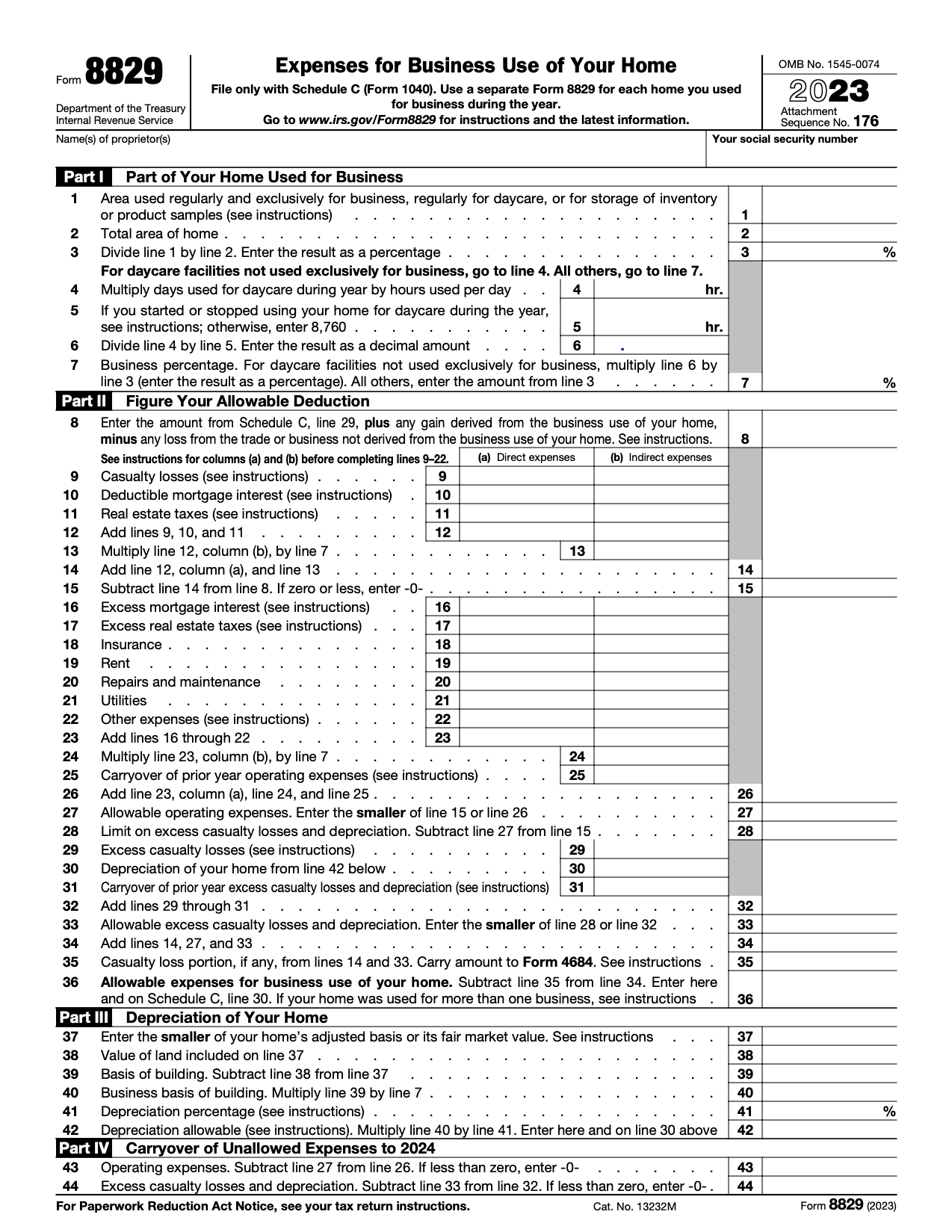
IRS Form 8829 is used to claim the home office deduction for people who are self-employed. This form helps you report expenses related to your home office, like rent, utilities, mortgage interest, and repairs. By filling out Form 8829, you tell the IRS how much of these costs are connected to your business, not your personal life.
The form is only for people who file Schedule C (Profit or Loss from Business). Employees who work from home for a company cannot use Form 8829. If you run a small business, freelance, or have a side gig, Form 8829 can help you save money.
Who Can Use The Home Office Deduction?
The IRS has clear rules for who can use the deduction. You must meet two main conditions:
- Exclusive Use: Your office must be used only for your business. If you work at your dining table and also eat there, you cannot claim that space.
- Regular Use: You must use the space regularly for your work. A room used once a month does not qualify.
Some examples:
- A spare bedroom used daily for business meetings qualifies.
- A corner of your living room used only for business calls can qualify if it is clearly separated.
If you are unsure, it helps to draw a map or take photos of your workspace. This can be useful if the IRS asks questions later.
What Expenses Can You Deduct?
Using Form 8829, you can deduct two main types of expenses:
Direct Expenses
These are costs for your office only. For example:
- Painting your office walls
- Installing shelves in your office
- Repairs only in your office area
Direct expenses are fully deductible.
Indirect Expenses
These are costs for your whole home. For example:
- Rent or mortgage interest
- Utilities (electricity, water, gas)
- Insurance
- General repairs
Indirect expenses must be split between business and personal use. You calculate the percentage based on the size of your office compared to your entire home.
Common Deductible Expenses
Here are the most common expenses people report on Form 8829:
- Mortgage interest
- Rent
- Utilities
- Homeowners insurance
- Repairs and maintenance
- Property taxes
- Depreciation (if you own your home)
- Security system costs
One non-obvious insight: Many people forget about internet costs. If you use the internet for business, you can deduct a portion of your bill.
How To Calculate Your Home Office Deduction
The deduction is based on the percentage of your home used for business. The IRS asks for the square footage of your office and the total square footage of your home.
For example:
- Your office: 200 square feet
- Your home: 2,000 square feet
Calculation: 200 / 2,000 = 10%
So, you can deduct 10% of your indirect expenses.
If you pay $12,000 in rent a year, your deduction for rent would be $1,200.
Here is a simple comparison table to help you understand the math:
| Expense | Total Amount | Office Percentage | Deductible Amount |
|---|---|---|---|
| Rent | $12,000 | 10% | $1,200 |
| Utilities | $2,400 | 10% | $240 |
| Insurance | $600 | 10% | $60 |
Some people use the simplified method instead of Form 8829. With this method, you simply multiply your office square footage (up to 300 sq ft) by $5. But using Form 8829 usually gives a bigger deduction if your costs are high.
Step-by-step Guide To Filling Out Form 8829
Filling out Form 8829 can be confusing. Here’s how to do it step by step:
Step 1: Measure Your Office
Find the exact size of your office space. Use a tape measure and write down the square footage.
Step 2: Gather Your Expenses
Collect bills and receipts for all home-related expenses. Organize them into direct and indirect costs.
Step 3: Calculate Your Office Percentage
Divide your office size by your total home size. Multiply by 100 to get the percentage.
Step 4: Fill Out The Form
Form 8829 has four main parts:
- Part I: Area calculation
- Part II: Expense listing
- Part III: Depreciation calculation (for homeowners)
- Part IV: Carryover of expenses
Make sure you enter each expense in the correct section. Direct expenses go in one column, indirect in another.
Step 5: Attach To Schedule C
After filling out Form 8829, attach it to your Schedule C when you file taxes.
Here is a data table showing which expenses go in which part of Form 8829:
| Expense Type | Form 8829 Section | Fully Deductible? |
|---|---|---|
| Direct (office repairs) | Part II, Line 4 | Yes |
| Indirect (utilities) | Part II, Line 9 | No |
| Depreciation | Part III | No |
| Carryover | Part IV | No |
Common Mistakes When Using Form 8829
Many people make errors when claiming the home office deduction. Here are some mistakes to avoid:
- Overestimating office size: Be honest. The IRS may check if your numbers are realistic.
- Mixing personal and business expenses: Only claim costs that are truly business-related.
- Forgetting to calculate depreciation: If you own your home, this is important. Depreciation is often missed by beginners.
- Claiming the deduction as an employee: Only self-employed people can use Form 8829.
- Not keeping records: Always save your receipts and documents.
A non-obvious insight: If you remodel your office, the cost can be a direct expense. But if you remodel your kitchen, it cannot be claimed.

Credit: ambrook.com
Pros And Cons Of Using Form 8829
Is Form 8829 always the best choice? Let’s compare:
| Form 8829 | Simplified Method |
|---|---|
| Usually higher deduction if costs are high | Easy to calculate |
| Must keep detailed records | No records needed |
| Can claim depreciation | No depreciation allowed |
| More complex to fill out | Simple one-page calculation |
If your home office is large or your expenses are high, Form 8829 can give you a bigger deduction. If you want speed and simplicity, the simplified method may be better.
Real-life Example
Let’s look at an example. Maria runs a graphic design business from her home. Her office is 150 square feet. Her home is 1,500 square feet. Maria’s yearly expenses:
- Rent: $18,000
- Utilities: $2,000
- Insurance: $1,000
- Repairs: $500 (only $200 for office)
Office Percentage: 150 / 1,500 = 10%
Deductions:
- Rent: $1,800 (10% of $18,000)
- Utilities: $200 (10% of $2,000)
- Insurance: $100 (10% of $1,000)
- Repairs: $200 (direct) + $30 (10% of $300 indirect) = $230
Maria’s total deduction: $1,800 + $200 + $100 + $230 = $2,330
If Maria used the simplified method: 150 sq ft x $5 = $750
So, Form 8829 gives her a much bigger deduction.
Credit: www.bench.co
Tips For Maximizing Your Home Office Deduction
- Keep detailed records: Save bills, receipts, and photos of your office.
- Separate business and personal expenses: Use a separate bank account if possible.
- Measure your office carefully: The IRS may check your numbers.
- Claim all direct expenses: Don’t forget costs like painting or repairs.
- Check your eligibility every year: Rules may change, or your situation may change.
Another tip: If you use your garage or a basement as an office, you can still claim the deduction if it meets the exclusive and regular use rules.
How Form 8829 Affects Selling Your Home
If you use Form 8829 and claim depreciation, it may affect your taxes when you sell your home. The IRS may ask you to recapture depreciation. This means you pay tax on part of the gain. Many beginners miss this point.
If you only use the simplified method, there is no depreciation and no recapture. If you plan to move soon, consider this before choosing Form 8829.
For more information, visit the official IRS site: IRS Form 8829 Guide.

Credit: ambrook.com
Frequently Asked Questions
What Is The Main Purpose Of Form 8829?
Form 8829 lets self-employed people claim a home office deduction for business use of their home. It helps reduce taxable income by reporting eligible expenses.
Can Employees Use Form 8829 For Home Office Deductions?
No. Only people who are self-employed and file Schedule C can use Form 8829. Employees cannot claim this deduction, even if they work from home.
What Happens If I Make A Mistake On Form 8829?
If you make an error, the IRS may adjust your deduction or ask for more information. In serious cases, you could face penalties. Always double-check your math and keep records.
How Do I Know Which Expenses Are Direct Or Indirect?
Direct expenses are only for your office space, like painting your office. Indirect expenses cover your whole home, like utilities or insurance. Only the office part of indirect expenses can be deducted.
Is There A Limit To The Home Office Deduction?
Yes. Your deduction cannot be more than your business income. If your expenses are higher than your income, you can carry over some costs to future years.
Claiming the home office deduction with Form 8829 is a smart way to save money if you run your own business from home. The rules are strict, but with careful planning, you can maximize your savings and stay safe with the IRS.
If you’re ready to tackle Form 8829, use this guide to make your tax filing easier and more accurate.