
Qi Wireless Charging Explained
Imagine charging your phone without plugging in a cable. You simply place it on a pad, and it starts charging. This technology is called Qi wireless charging, and it is rapidly changing how people power their devices. More smartphones, earbuds, smartwatches, and even some laptops use Qi wireless charging today. But how does it really work? Is it safe? Is it efficient? In this article, you’ll learn everything you need to know about Qi wireless charging—from how it works, to practical tips, to the future of wireless power. If you want to understand Qi charging, this guide is for you.
What Is Qi Wireless Charging?
Qi (pronounced “chee”) is the global standard for wireless charging. The Wireless Power Consortium (WPC) created Qi in 2008. Qi is used by most leading smartphone brands, including Apple, Samsung, Google, and Huawei. It is based on inductive charging, which means electricity is transferred from a charger to your device through electromagnetic fields, not cables.
The word “Qi” comes from Chinese philosophy and means energy flow. The idea is simple: you place your device on a Qi-compatible pad or stand, and it starts charging automatically. There’s no need to connect a cable, align connectors, or worry about worn-out ports.
How Qi Wireless Charging Works
Qi wireless charging uses electromagnetic induction. There are two main parts:
- The charging pad (transmitter)
- The device (receiver)
Inside the charging pad, there’s a coil of wire. When you plug the pad into electricity, it creates an alternating current (AC). This current flows through the coil and produces an electromagnetic field. Inside your phone (or other device), there’s a second coil. When you place your device on the pad, the pad’s electromagnetic field induces a current in the device’s coil. This converts into direct current (DC) and charges your battery.
Here’s a step-by-step explanation:
- The charging pad is plugged into a power source.
- It creates an electromagnetic field using a coil.
- When you place your device on the pad, the device’s coil picks up this field.
- The device converts the energy into usable electricity.
- Your device’s battery charges—no cables needed.
Non-obvious insight: Qi charging only works when the coils are close together. If the pad and device are misaligned, charging may be slow or may not start at all.
Qi Standard: Key Features And Specifications
Qi is not just a single technology—it’s a set of standards. These standards ensure that devices and chargers work together safely and efficiently.
Power Levels
Qi supports several power levels:
- Low Power: Up to 5 watts (W). Used for phones and small devices.
- Medium Power: Up to 15W. Used for fast charging phones and tablets.
- High Power: Up to 30W or more. Used for laptops and larger devices.
Most smartphones use 5W to 15W Qi charging. Some newer phones support fast wireless charging at up to 30W.
Safety Features
Qi includes many safety features:
- Foreign object detection: If a metal object (like keys or coins) is on the pad, charging stops to prevent overheating.
- Temperature control: If the pad or device gets too hot, charging slows down or stops.
- Over-voltage protection: Prevents damage from power surges.
Device Compatibility
Qi is widely supported. Over 900 device models use Qi, including iPhone, Samsung Galaxy, Google Pixel, and many wireless earbuds. Qi chargers also work with smartwatches and some laptops.
Communication
Qi uses two-way communication between the pad and device. When you place your device on the pad, the pad sends a signal to the device. The device responds, confirming it can charge. This makes charging more reliable and safe.
Qi Vs. Other Wireless Charging Standards
Qi is the most popular wireless charging standard, but it’s not the only one. There are other standards, like PMA (Power Matters Alliance) and AirFuel. However, Qi dominates the market.
Here’s a comparison:
| Standard | Max Power | Compatibility | Main Use |
|---|---|---|---|
| Qi | Up to 30W | Most smartphones, earbuds | Phones, wearables |
| PMA | Up to 5W | Some older devices | Phones |
| AirFuel | Up to 50W | Few devices | Industrial, IoT |
Non-obvious insight: Some public charging stations use PMA or AirFuel, but most smartphones only support Qi. Always check compatibility before using a public charger.
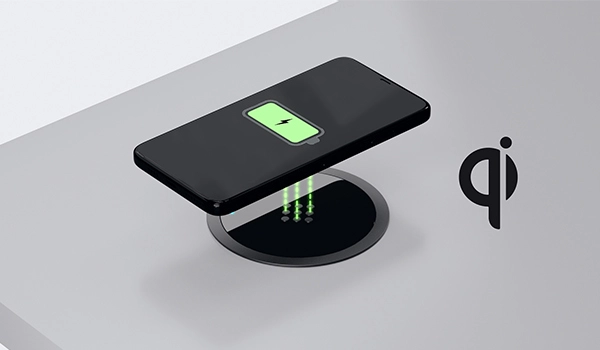
Credit: www.asaplastici.com
Qi Wireless Charging In Practice
Wireless charging sounds simple, but real-world experience is a bit more complex. Let’s look at practical aspects.
Charging Speed
Qi charging is usually slower than wired charging. For example:
- Typical wired charging: 18W to 65W
- Typical Qi wireless charging: 5W to 15W
Some phones support fast Qi charging (up to 30W), but you need a compatible charger and phone.
Positioning
You must place your device correctly on the pad. If the coils are misaligned, charging may be slower or stop completely. Some pads have guides or magnets to help you align.
Case Compatibility
Most phone cases work with Qi charging if they are not too thick (less than 3mm). Metal cases or cases with magnets may block charging.
Heat
Wireless charging produces more heat than wired charging. If your phone or pad gets hot, charging may slow down to protect the battery.
Multi-device Charging
Some Qi pads can charge several devices at once, like a phone and earbuds. However, charging multiple devices can slow down the speed for each.
Practical Example
Imagine you want to charge your iPhone 14. You place it on a Qi pad. The phone starts charging at 7. 5W. If you add wireless earbuds to the pad, both will charge, but the phone may charge slower.
Qi Charging For Different Devices
Qi is used in many devices. Let’s see how it works for each type.
Smartphones
Most modern smartphones support Qi. Apple added Qi to iPhones from the iPhone 8 onwards. Samsung, Google, and Huawei also support Qi.
- Typical charging speed: 5W to 15W
- Fast charging: Up to 30W (with special pads)
Earbuds
Many wireless earbuds come with Qi-compatible cases. You place the case on the pad, and it charges.
- Typical charging speed: 2W to 5W
Smartwatches
Some smartwatches use Qi, but others use proprietary chargers. Always check your watch’s specs.
- Typical charging speed: 1W to 3W
Laptops
A few laptops, like the Dell Latitude series, support Qi charging. However, most laptops still use wired charging due to higher power needs.
- Typical charging speed: 30W or more
Qi Wireless Charging: Pros And Cons
Qi charging has many benefits, but it also has some downsides.
Pros
- Convenience: No cables, easy to use
- Less wear: No damage to charging ports
- Universal: Works with many devices
- Safe: Built-in safety features
Cons
- Slower charging: Usually slower than wired
- Position sensitive: Must align device correctly
- Heat: Produces more heat
- Efficiency: Uses more electricity (up to 20% less efficient than wired)
Qi Wireless Charging Efficiency
Wireless charging is less efficient than wired charging. Some energy is lost as heat. Typical Qi charging efficiency is 60% to 80%. Wired charging is usually 85% to 95%.
Here’s a comparison:
| Charging Method | Efficiency (%) | Heat Generated |
|---|---|---|
| Qi Wireless | 60–80 | Moderate |
| Wired | 85–95 | Low |
Non-obvious insight: If you care about saving electricity or reducing battery wear, use wired charging for most daily charging, and Qi for convenience.
Safety And Health Concerns
Qi charging is generally safe, but some people worry about electromagnetic fields. Studies show Qi charging produces much less electromagnetic radiation than Wi-Fi or cellular signals. The Wireless Power Consortium requires strict safety tests.
Common Concerns
- Fire risk: Qi pads include sensors to shut off if overheating.
- Battery health: Wireless charging produces more heat, which can reduce battery life. To protect your battery, avoid charging in hot environments.
- Radiation: Qi pads produce less radiation than microwaves or Wi-Fi routers.
For more details, see Wireless Power Consortium FAQ.
Qi Wireless Charging In Public Places
Wireless charging pads are appearing in airports, hotels, cafes, and cars. Many cars now include Qi pads for easy phone charging. Some furniture brands, like IKEA, sell tables with built-in Qi pads.
How To Use Public Qi Chargers
- Check your device supports Qi.
- Make sure the pad is clean and dry.
- Remove thick or metal cases.
- Align your device properly.
Non-obvious insight: Some public chargers may be slow or crowded. Also, avoid leaving your phone unattended while charging in public.
Qi Wireless Charging In Cars
Many new cars include Qi pads in the center console. This allows you to charge your phone while driving, without cables.
Common Car Brands With Qi
- Toyota
- BMW
- Honda
- Mercedes-Benz
- Ford
Tips For Using Qi In Cars
- Remove cases thicker than 3mm.
- Make sure the pad is free from coins or keys.
- Some cars turn off Qi charging when the engine is off.
Qi Wireless Charging For Home Use
Qi charging pads are available from many brands. Some pads are flat, some are stands, and some are built into furniture.
Popular Home Qi Chargers
- Anker PowerWave
- Samsung Wireless Charger
- Belkin Boost Up
- Apple MagSafe (Qi compatible)
Choosing A Home Qi Charger
Look for these features:
- Power output: Make sure it matches your device’s needs.
- Pad size: Larger pads are easier to align.
- Multi-device support: Charge phone and earbuds at once.
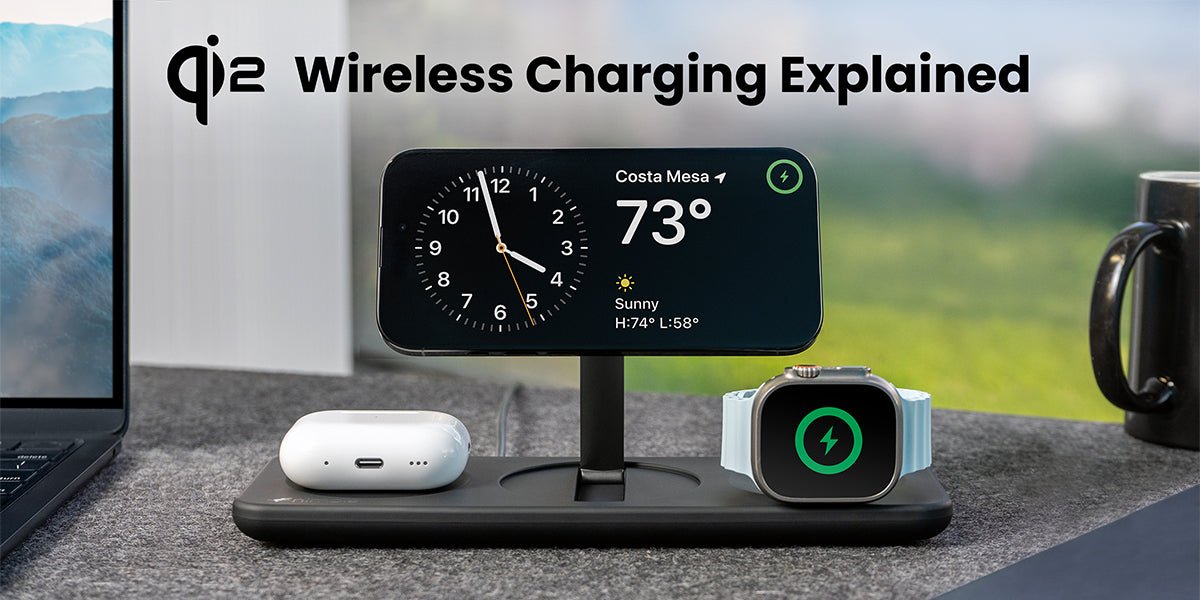
Credit: www.gonimble.com
Qi Wireless Charging: Common Mistakes
Many people make mistakes when using Qi charging. Here are some to avoid:
- Using thick cases: Blocks charging.
- Misaligning device: Slows or stops charging.
- Using incompatible pads: Not all pads work with all devices.
- Ignoring heat: Charging in hot places can harm your battery.
- Leaving metal objects: Can cause overheating.
Qi Wireless Charging And Battery Life
Wireless charging produces more heat, which can reduce battery life over time. To protect your battery:
- Charge in cool environments.
- Avoid charging overnight.
- Use Qi for convenience, not all-day charging.
Future Of Qi Wireless Charging
Qi charging is evolving. New features are coming soon:
- Longer distance charging: Pads will charge devices up to 4cm away.
- Higher power levels: Faster charging for laptops and tablets.
- Smart charging: Pads will recognize devices and adjust power automatically.
- Integration: Qi pads in furniture, cars, and public spaces.
Upcoming Qi Standard: Qi2
The Qi2 standard is launching soon. It will use magnets for better alignment and support faster charging (up to 50W). Qi2 will also include new safety features.
Environmental Impact Of Qi Wireless Charging
Qi charging uses more electricity than wired charging. If millions of people switch to wireless charging, this could increase energy use. Manufacturers are working to improve efficiency and reduce waste.
Tips for eco-friendly charging:
- Use wireless charging only when needed.
- Unplug pads when not in use.
- Use efficient chargers certified by WPC.
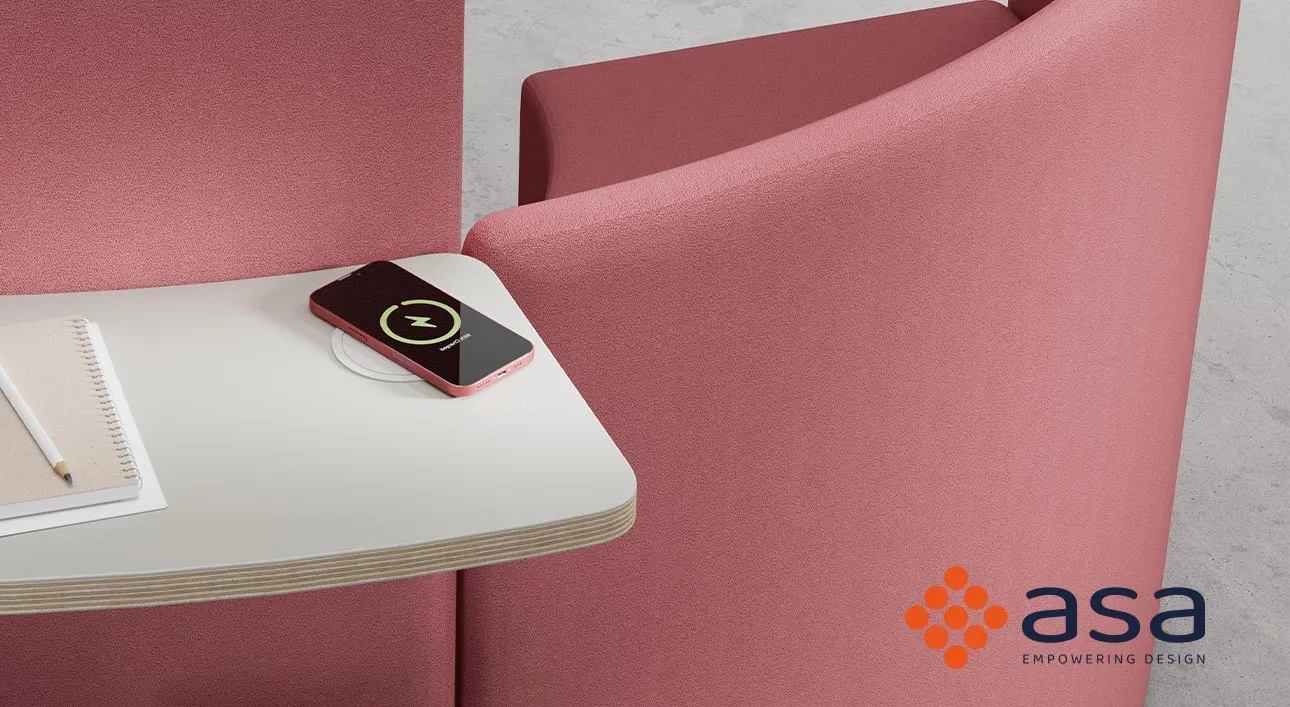
Credit: www.asaplastici.com
Qi Wireless Charging: Buying Guide
If you want to buy a Qi charger, consider these points:
- Check compatibility: Make sure your device supports Qi.
- Choose power level: Match pad power to your device.
- Pad type: Flat pads, stands, or multi-device pads.
- Brand reputation: Look for certified brands.
- Safety features: Foreign object detection, temperature control.
- Warranty: Look for at least a 1-year warranty.
Real-world Data: Qi Charging Adoption
In 2023, over 1.2 billion Qi devices were sold worldwide. Qi charging is used in over 80% of smartphones. The wireless charging market is growing at 25% per year, according to industry data.
Here’s a breakdown of Qi device adoption:
| Device Type | Percentage with Qi | Year Introduced |
|---|---|---|
| Smartphones | 80% | 2013 |
| Earbuds | 60% | 2018 |
| Smartwatches | 30% | 2016 |
| Laptops | 5% | 2020 |
Frequently Asked Questions
What Does “qi” Mean?
Qi is a Chinese word meaning “energy flow.” It is used as the name for the global standard for wireless charging, created by the Wireless Power Consortium.
Is Qi Wireless Charging Safe For My Phone?
Yes, Qi charging is safe for most devices. It includes safety features like foreign object detection and temperature control. However, charging in hot environments or using non-certified pads can harm your battery.
Why Is Qi Charging Slower Than Wired Charging?
Qi charging loses some energy as heat and needs close coil alignment. Wired charging sends electricity directly, so it is usually faster and more efficient.
Can I Use My Phone While It’s Charging On A Qi Pad?
You can use your phone while charging, but you must keep it on the pad. If you move it, charging may stop. Using your phone may also slow charging speed.
Do All Smartphones Support Qi Charging?
No, but most modern smartphones do. Check your device’s specs for Qi compatibility. Older phones may need a special case or adapter to use Qi charging.
Qi wireless charging is changing how we power our devices. It brings convenience and reduces wear on ports, but it has limits in speed and efficiency. Understanding how Qi works, its benefits, and its challenges will help you use it wisely.
As the Qi standard evolves, expect faster, safer, and more flexible wireless charging in the future.
Related Office Guides
Continue with these related workspace guides: