
Cleaning your wood desk the right way can make a big difference in how long it lasts and how good it looks. Many people wipe their desks with any cleaner or cloth, but wood surfaces need special care. If you use the wrong products or skip important steps, you could end up with scratches, stains, or a dull finish.
This guide walks you through everything you need to know to keep your wood desk in top shape, from daily dusting to fixing water rings and choosing the safest cleaners.
Why Cleaning Your Wood Desk Matters
A wood desk adds warmth and beauty to your room or office, but it also collects dust, fingerprints, and spills. Over time, dirt and oils can dull the wood’s shine or even damage the surface. Regular cleaning keeps the desk looking new, prevents long-term stains, and helps you work in a clean, healthy space.
Interesting fact: Studies show that office desks can have more bacteria than a toilet seat—up to 400 times more, especially if you eat at your desk. Regular cleaning is not just about looks; it’s about hygiene.
Understanding Your Wood Desk Finish
Not all wood desks are the same. The cleaning method depends on the desk’s finish. There are three main types:
- Sealed (varnished, lacquered, polyurethane): These desks have a hard top layer that protects the wood. They are more water-resistant and easier to clean.
- Oiled or waxed: These have a softer, natural feel but are more sensitive to water and harsh chemicals.
- Unfinished: Rare but sometimes found in rustic styles; these need the gentlest care.
If you are not sure, rub a drop of water on a hidden area. If it beads up, the desk is sealed. If the wood absorbs the water, it is likely oiled, waxed, or unfinished.
Credit: www.cabinfield.com
Essential Tools And Products For Cleaning
You don’t need expensive products to clean a wood desk, but you do need the right ones.
Basic supplies:
- Soft microfiber cloths (at least two)
- Mild dish soap
- Distilled water (to avoid mineral spots)
- Soft brush or vacuum with a brush attachment
- Cotton swabs (for small corners)
- Wood polish or conditioner (optional, for shine)
- White vinegar (for tough spots)
- Olive oil or mineral oil (for polishing, if safe for your finish)
Never use: Bleach, ammonia, strong detergents, rough sponges, or paper towels (they can scratch).
Step-by-step: How To Clean Your Wood Desk Safely
1. Clear The Desk
Remove everything: lamps, papers, computers, and accessories. This lets you reach all areas and prevents water from getting under items.
2. Dust Thoroughly
Dust is abrasive, so always remove it first. Use a dry microfiber cloth or a vacuum with a soft brush. Start from the top and work down. Don’t forget drawer handles and legs.
Tip beginners miss: Dust in the direction of the wood grain to avoid scratching.
3. Prepare A Gentle Cleaning Solution
Mix a few drops of mild dish soap in a bowl of distilled water. You only need a little soap.
Data insight: According to cleaning experts, more than 90% of household wood damage comes from using too much water or strong cleaners.
4. Wipe The Surface
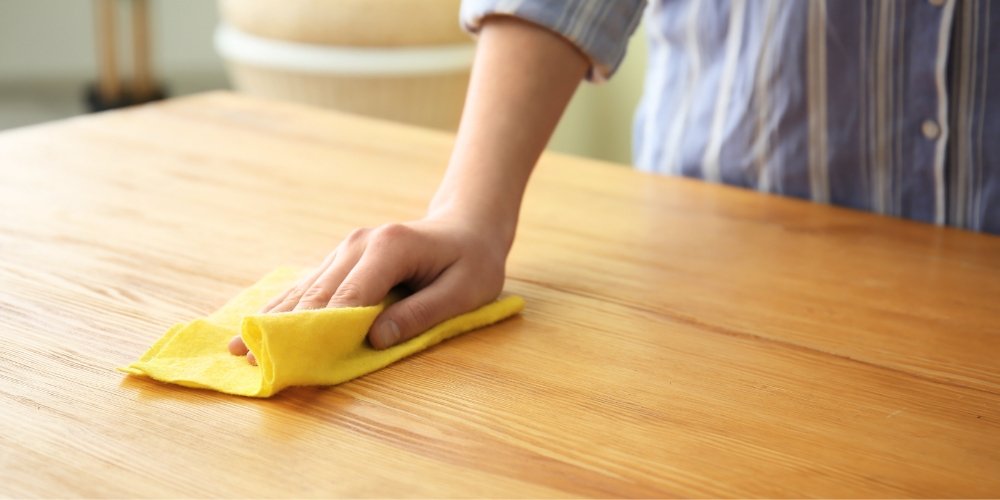
Dip a microfiber cloth into the soapy water, wring it out well (cloth should be damp, not wet), and wipe the desk gently. Again, follow the grain of the wood.
Common mistake: Leaving a wet cloth on the desk, which can cause water stains.
5. Rinse And Dry
Wipe again with a cloth dampened with clean water (no soap) to remove any residue. Immediately dry the desk with a soft, dry cloth.
6. Spot Clean Stubborn Stains
For sticky spots or light stains:
- Use a cloth dipped in a mix of 1 part white vinegar to 3 parts water.
- Test in a hidden area first.
- For ink marks, rub gently with a cotton swab dipped in rubbing alcohol, but don’t overdo it.
7. Polish Or Condition (optional)
If your desk’s finish allows, apply a small amount of wood polish or oil using a clean cloth. Buff to a shine, always following the grain.
Pro insight: Too much polish attracts dust. Apply only every few months, not weekly.
How To Remove Common Wood Desk Stains
Different stains need different treatments. Here’s a quick guide for everyday problems.
| Stain Type | How to Clean | Extra Advice |
|---|---|---|
| Water rings | Cover with a dry cloth and press with a warm iron for a few seconds. | Test first; do not use steam. |
| Ink stains | Gently rub with rubbing alcohol on a cotton swab. | Don’t soak the wood. |
| Food stains | Clean with soapy water, then dry. | Act quickly before it sets. |
| Grease spots | Sprinkle baking soda, let sit, wipe with damp cloth. | Baking soda absorbs oil. |
Comparing Cleaning Methods For Different Finishes
Different wood finishes need different care. Here’s a quick comparison:
| Finish Type | Best Cleaning Method | What to Avoid |
|---|---|---|
| Sealed | Soapy water, gentle polish | Strong chemicals, soaking wet cloths |
| Oiled | Dry dust, occasional oil treatment | Water, vinegar, alcohol |
| Unfinished | Dry or barely damp cloth only | Any liquid, polish, or oil |

Credit: www.youtube.com
How Often Should You Clean Your Wood Desk?
It depends on how much you use it and your environment.
- Daily: Quick dusting, especially if you eat at your desk.
- Weekly: Full wipe with soapy water.
- Monthly: Spot cleaning and optional polish.
- After spills: Clean immediately to prevent stains.
Tip: In humid climates, clean more often to prevent mold. In dry climates, oiling every few months prevents cracking.
Protecting Your Wood Desk From Damage
Cleaning is only part of the story. Protect your desk with these habits:
- Use coasters and mats: Prevent water rings and heat marks from drinks.
- Avoid direct sunlight: UV rays can fade the finish.
- Keep sharp items away: Pens and scissors can scratch.
- Don’t let dust build up: Dust attracts moisture and can dull the surface.
- Rotate items: Move lamps and organizers occasionally to prevent uneven fading.
- Control room humidity: Wood expands and contracts with moisture, so use a humidifier or dehumidifier as needed.
:max_bytes(150000):strip_icc()/wood-furniture-cleaning-dusting-f5c1fe8cb996447e86aafc20e6aba8b6.jpg)
Credit: www.realsimple.com
What Not To Do When Cleaning A Wood Desk
Many people make mistakes that can ruin their desk’s finish. Avoid these:
- Don’t use all-purpose cleaners—they often have ammonia.
- Never scrub with steel wool or rough sponges.
- Don’t pour water or cleaner directly on the desk.
- Don’t let spills sit—clean them up right away.
- Avoid using furniture sprays with silicone, which can leave a sticky residue.
Non-obvious insight: Even clean hands can transfer oils that dull wood. Wash your hands before working at your desk.
Eco-friendly Cleaning Options
Want to avoid chemicals? Try these natural methods:
- Mix a few drops of olive oil with white vinegar for a homemade polish (test on a hidden area first).
- For dusting, a slightly damp microfiber cloth is usually enough.
- Baking soda is safe for removing odors and minor stains, but always use it gently.
Eco-friendly cleaning is gentle on both your desk and the environment. For more safe cleaning tips, check resources like EPA Safer Choice.
How To Deep Clean An Old Or Neglected Desk
If your desk hasn’t been cleaned in months (or years), a deep clean can bring back its beauty.
- Remove all items, including drawers if possible.
- Dust every surface, including underneath and inside drawers.
- Wash with a slightly stronger mix of soap and water, but don’t let water pool.
- For stubborn grime, use a soft brush (like a toothbrush) for corners.
- Rinse and dry as usual.
- Finish with a wood conditioner or polish if the desk is sealed or oiled.
Extra tip: If the surface is sticky and nothing works, it may be time to refinish the desk. Consult a furniture expert if you are unsure.
When To Call A Professional
Most desks can be cleaned at home, but call a professional if:
- The desk is an antique or valuable heirloom.
- The finish is flaking or peeling.
- There is mold or deep stains that do not come out.
- You are not sure what type of finish you have.
Professionals have tools and products for safe, deep cleaning or refinishing.
Frequently Asked Questions
How Can I Tell What Kind Of Finish My Wood Desk Has?
Rub a drop of water on a hidden area. If it beads up, it’s sealed (varnish, lacquer, or polyurethane). If it absorbs, your desk is likely oiled, waxed, or unfinished.
Can I Use Vinegar To Clean My Wood Desk?
Vinegar is safe in small amounts and only on sealed wood. Always dilute (1 part vinegar to 3 parts water) and test in a hidden spot first. Never use vinegar on oiled or unfinished wood.
What Should I Do If I Spill Coffee Or Juice On My Desk?
Wipe it up immediately with a soft, dry cloth. Then clean with a damp cloth and dry again. The longer you wait, the higher the chance of a permanent stain.
Is It Safe To Use Disinfectant Wipes On Wood Desks?
Most disinfectant wipes contain alcohol or ammonia, which can damage wood finishes. Only use wipes labeled safe for wood, and always test on a hidden area first.
How Often Should I Polish My Wood Desk?
Only polish every few months, not weekly. Too much polish can cause buildup and attract dust. For daily cleaning, a damp microfiber cloth is enough.
Keeping your wood desk clean is simple but requires the right approach. With a little daily care and attention to the type of wood and finish, you can enjoy a beautiful and healthy workspace for years to come.